Anchor
Connect the main furniture.
A rug should visually gather the key pieces in a room. In seating areas, place at least the front legs of sofas and chairs on the rug.
A well-sized rug does more than cover the floor. It anchors furniture, softens movement, defines zones, and gives the room a calmer, more intentional rhythm. Use this guide to choose the right rug size for living rooms, bedrooms, dining areas, entryways, and layered spaces.
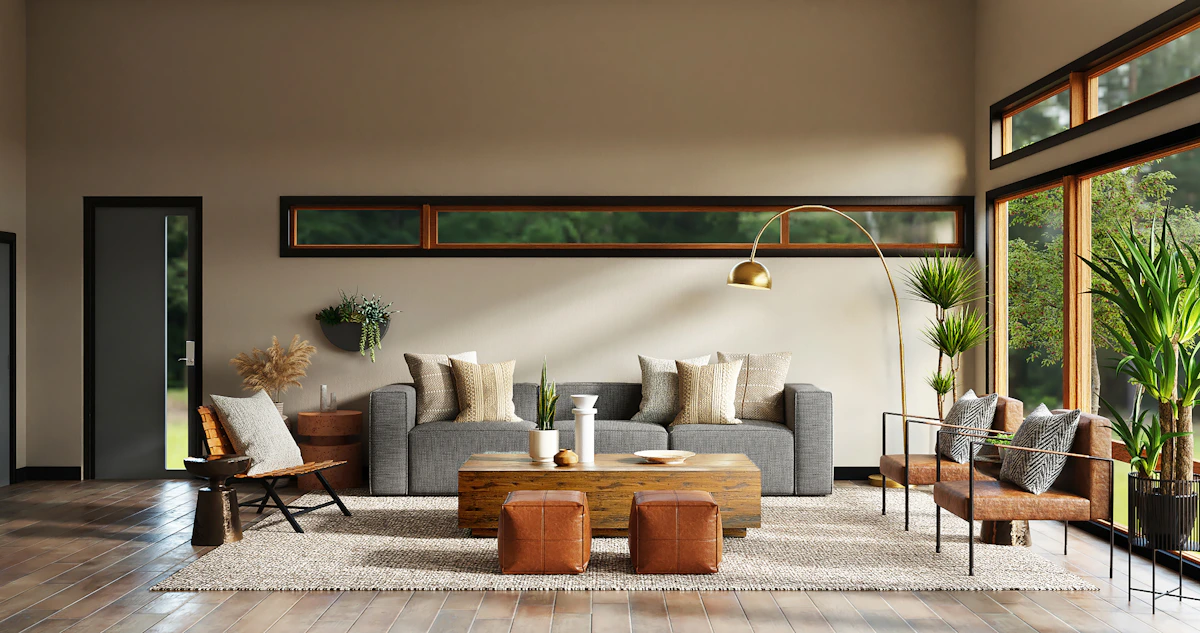
The best rug size is determined by how your furniture sits, how people move through the space, and how much breathing room you want around the room perimeter.
A rug should visually gather the key pieces in a room. In seating areas, place at least the front legs of sofas and chairs on the rug.
Aim for a consistent floor border around the rug. Most rooms feel balanced with 12 to 24 inches of visible flooring near the walls.
Keep rug edges away from high-traffic turns whenever possible. Walkways feel cleaner when rug edges do not interrupt every step.
Large furniture needs a larger rug. A small rug under oversized seating can make the whole room feel disconnected.
Homora rugs are selected for everyday comfort, polished styling, and flexible placement across modern homes. Think of your rug as a visual frame: it should support the room layout, soften the mood, and help every furniture piece feel deliberate.

Exact fit depends on room dimensions and furniture scale, but these core sizes cover the most common layouts for Homora living spaces.
Best for compact entryways, bedside accents, reading corners, layered styling, and small zones that need softness without full-room coverage.
Works well for apartments, smaller living rooms, home offices, nursery seating areas, and bedrooms where only the lower bed area needs coverage.
A strong choice for standard living rooms, queen bedrooms, dining tables for four to six, and spaces where furniture needs a unified foundation.
Ideal for larger seating plans, king bedrooms, open concept layouts, and rooms where all main furniture legs should sit on the rug.
Use in hallways, kitchens, narrow entry spaces, laundry areas, and beside beds to create softness through long, slim walkways.
Great for round dining tables, small conversation corners, play spaces, curved furniture moments, and rooms that need visual softness.
Each room has a different relationship between furniture, movement, and comfort. Use these placement notes before choosing your final size.
For most living rooms, choose a rug large enough for the front legs of the sofa and chairs to rest on it. Larger rooms can place all seating legs fully on the rug.
A bedroom rug should feel soft when you step out of bed. Place the rug under the lower two-thirds of the bed or use runners on both sides.

Select a rug that extends beyond the dining table on every side. Chairs should remain on the rug when pulled back for sitting.

Entry rugs should welcome the room without blocking door movement. Choose durable textures and leave clean space at thresholds.

Measuring the actual furniture layout gives you a more accurate rug choice than relying on room dimensions alone.
Place painter tape where the rug edge would sit and check whether furniture legs feel connected to the shape.
Leave enough exposed floor around the rug so doorways, traffic paths, and cabinet openings remain easy to use.
Rug edges should feel intentional. Avoid placing an edge directly where people naturally step or where chair legs catch.
Low-pile rugs work well under dining chairs and doors. Plush rugs are better for bedrooms, lounging zones, and cozy corners.

After the size is right, refine the look with material, texture, placement, and layering choices that suit your room.
Layer a smaller patterned rug over a larger natural rug to add depth while keeping the room grounded.
Choose low pile for dining, entryways, and high-traffic rooms. Choose softer pile for bedrooms and relaxed lounge areas.
A rug feels more integrated when it repeats one color already found in your sofa, pillows, art, wood, or curtains.
A rug pad helps reduce slipping, adds comfort underfoot, protects flooring, and keeps the rug looking smoother.
These answers cover the most common sizing questions for area rugs, runners, bedrooms, dining rooms, and open layouts.
In larger rooms, placing all furniture legs on the rug creates a polished, fully anchored look. In smaller rooms, placing only the front legs on the rug is usually enough to connect the seating area.
An 8x10 rug works well for many standard living rooms. It is usually large enough for the front legs of a sofa and chairs to sit on the rug while leaving a balanced border of visible flooring.
An 8x10 rug is a strong choice for most queen beds. Place it under the lower two-thirds of the bed so the rug extends beyond both sides and the foot of the bed.
A dining rug should extend at least 24 to 30 inches beyond the table on all sides so chairs stay on the rug when pulled back.
Yes. Runners are a practical option beside beds, especially in smaller bedrooms or rooms where a full-size area rug would cover too much floor.
Choose the larger size when the room allows it. A larger rug usually makes furniture feel more connected and gives the space a more elevated, designer-finished look.
If you are unsure between sizes, contact Homora with your room dimensions, furniture layout, and the rug placement you are considering. A simple measurement note can make the final choice much easier.